EWOSA News - January 2026

From the Ombudsman

Sandy Canale
Sandy Canale, Energy & Water Ombudsman (South Australia)

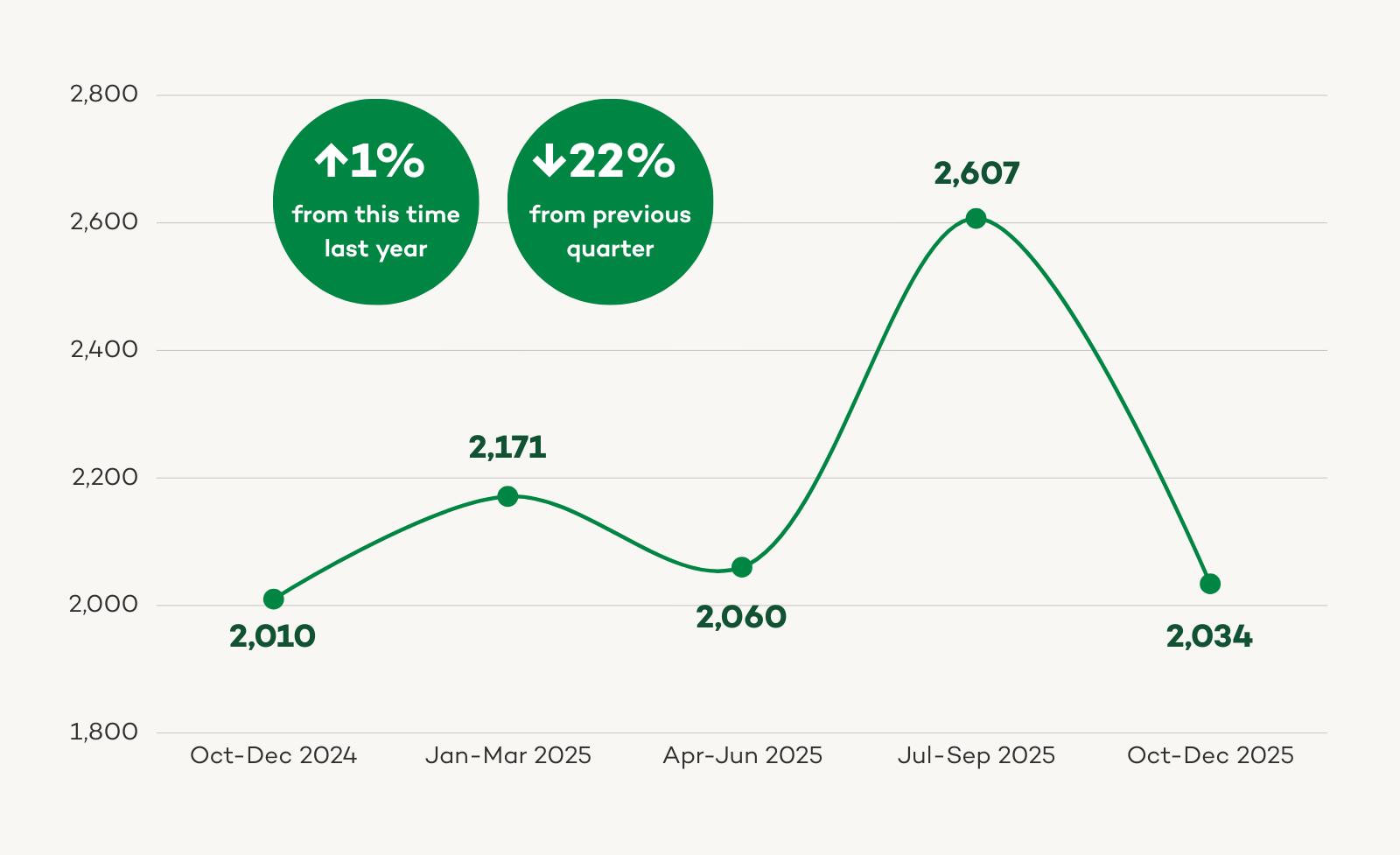
The start of the calendar year is a chance to take stock and look ahead. EWOSA received 2,034 cases in the December 2025 quarter, a 1% increase on the same period last year. 2025 was another busy year, with shifting patterns in how consumers are seeking help. While the total number of cases fell by 9% to 8,872, this headline figure masks important changes.

Complaints decreased by 17%, while enquiries increased by 10%, suggesting more consumers are getting in touch earlier to ask questions or seek advice before issues escalate. This trend coincides with increased awareness of EWOSA, following the inclusion of our contact details on energy bills since September 2023 and SA Water bills from January 2025.

Our customer surveys reinforce what we see in our casework. More than three quarters of respondents say the energy market is hard to understand. This helps explain the rise in enquiries and highlights the importance of clear, accessible information to help consumers navigate increasingly complex bills and offers.

These concerns are also being examined by regulators. In December, the Australian Energy Market Commission released a draft electricity pricing review aimed at improving consumer outcomes, while the Australian Energy Regulator began reviewing retail guidelines covering pricing information, bills and hardship. Together, these processes present an opportunity to reduce confusion, improve transparency, and secure better outcomes for customers – especially those who are vulnerable or less able to participate in this rapidly evolving market.

With the Commonwealth Government’s $75 per quarter Energy Bill Relief payment ending in 2025, cost pressures are likely to increase, making effective hardship programs, payment plans and concessions more important than ever.

Read on for more in the latest edition of EWOSA News.

Sandy Canale

Energy and Water Ombudsman SA

Electrcity

Hot Issues

AEMC flags major reforms to electricity pricing in draft review

The Australian Energy Market Commission (AEMC) has released a draft review of electricity pricing, proposing reforms to improve fairness, competition and transparency as the energy market continues to evolve.

Australia’s energy system is changing rapidly, with more households adopting solar, batteries and electric vehicles, and more people switching from gas to electricity. At the same time, retailers are introducing increasingly complex products and pricing structures. While these developments can benefit consumers who can invest in new technologies or actively manage their energy use, they also make it harder for many households to understand their bills and compare offers. The AEMC warns that without changes to network tariffs, consumers who are less able to invest in new technologies risk paying a disproportionate share of network costs.

A key focus of the draft report is harnessing competition to deliver better outcomes for customers who do not actively engage with the electricity market. The AEMC recommends requiring retailers to charge the same price to all customers on the same plan, addressing the “loyalty tax” paid by customers who do not regularly shop around. It also proposes a model in which retailers would compete to supply customers who have not actively chosen a market offer, placing downward pressure on standing offer prices.

The Commission also recommends upgrading Energy Made Easy to better reflect emerging products. On the network side, it proposes reforms to tariff design to support a lowest-cost grid, fairer cost sharing and more flexible retail offers.

The AEMC is seeking feedback on the draft recommendations, with submissions closing on 13 February 2026. EWOSA is preparing a joint submission with other energy ombudsman offices to provide input.

AER consults on simplifying retail energy guidelines

The Australian Energy Regulator (AER) has released a consultation paper as part of its Retail Guidelines Review, seeking stakeholder feedback on opportunities to refresh and combine four existing retail guidelines to better reflect how the energy market works today and to improve customer outcomes.

The consultation focuses on consolidating the Benefit Change Notice Guidelines, Better Bills Guideline, Customer Hardship Policy Guideline and Retail Pricing Information Guidelines into a more user-friendly single document. This is designed to reduce duplication, simplify regulatory obligations for providers and help customers better understand energy plans, bills and assistance.

The paper seeks stakeholder views on a set of priority areas where the guidelines could be strengthened:

  • Improving retail communications so that bills and plan information are easier for consumers to understand
  • Managing increasing complexity by ensuring information about complex plans is clear and tailored to consumers’ needs.
  • Making it easier to find a better offer, including clarifying “better offer” messages, expanding where they appear and defining a consistent approach for all customers.
  • Improving price transparency, such as clearer fees and charges and better information for embedded network customers.
  • Improving payment assistance information by strengthening hardship policy guidance and helping eligible customers access concessions and rebates.

EWOSA provided a joint submission with other energy and water ombudsman on a consultation paper in December 2025. Draft guidelines are expected to be published for feedback in April 2026.

Water

Case Studies

Eligible customer misses out on Medical Heating and Cooling Concession

For years Jung-Hee* had been getting the Medical Heating and Cooling Concession and other rebates to help with her household energy bills. But one day, these rebates ceased and were no longer applied.

She didn’t notice this until she moved house and closed her old account. When she asked about it, her provider said they couldn’t apply the missed rebates to her final bill.

When she started getting debt collection threats, she lodged a complaint with EWOSA. We worked with Jung-Hee, her energy provider, and Concessions SA to investigate the issue. We found that the provider had incorrectly assessed Jung-Hee as ineligible for the rebates due to a breakdown in communication with the Department of Human Services.

We confirmed that Jung-Hee was eligible and informed her energy provider, who promptly credited the $1,800 in missed rebates to her accounts.

*Names have been changed

Gas

Customer Corner

Practical tips for saving energy and water in summer

Hot, dry summer weather often leads to higher energy use to keep homes cool and increased water use to maintain gardens. With bills under pressure, even small changes can help reduce costs.

The Commonwealth Government has recently released a guide to saving energy over summer, with practical advice ranging from free actions households can take right now, to low-cost improvements and longer-term investments to improve efficiency.

SA Water also provides a range of practical tips to help households reduce water use both during summer and throughout the year. These include simple actions such as taking shorter showers, matching washing machine load settings to what you are washing, only running the dishwasher when it is full, and watering gardens outside peak evaporation times.

In addition, the SA Water website offers tools to help consumers better understand their water use, including an online calculator to estimate household consumption and a short video on improving water efficiency at home.

Smart homes and their role in managing household electricity use

The Australian Government’s Department of Climate Change, Energy, the Environment and Water (DCCEEW) has released a new online guide to electrification to help households plan their move from gas to electric appliances.

Electrification – replacing gas-powered systems with electric alternatives – can help households lower their energy bills, cut emissions, and improve indoor air quality. Going all-electric in key areas such as hot water, heating and cooling, and cooking can save hundreds of dollars a year, with even greater savings for homes with solar and battery storage.

Their online resource outlines the benefits of going all-electric, practical steps to plan your transition, and available rebates and assistance programs.

Visit energy.gov.au to learn more about how to electrify your home and explore other useful household energy resources.


Third party

Quarterly Trends

Cases received this quarter
Cases received per quarter since the same time last year.
Cases received by industry
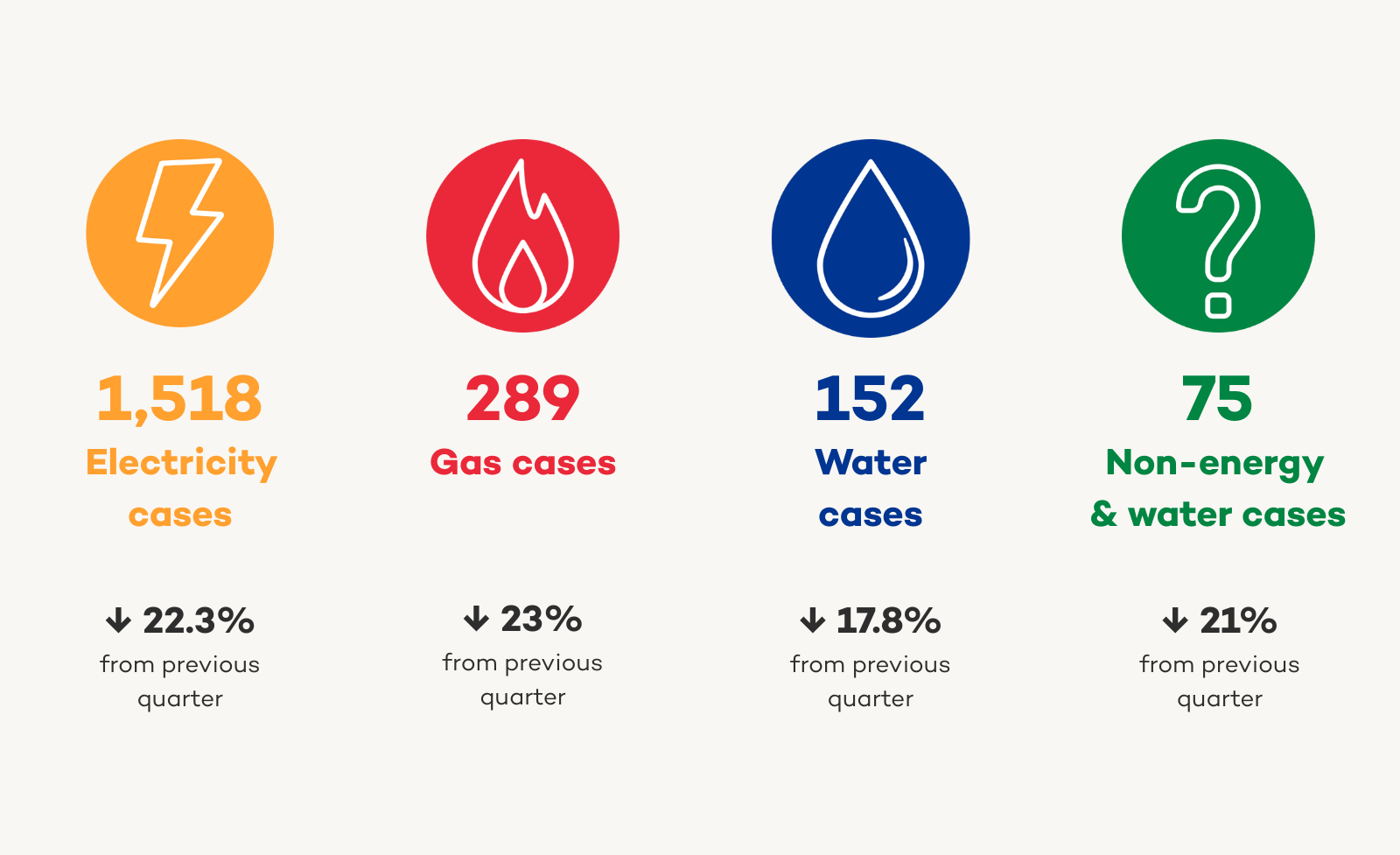
Cases received by industry, Oct-Dec 2025.
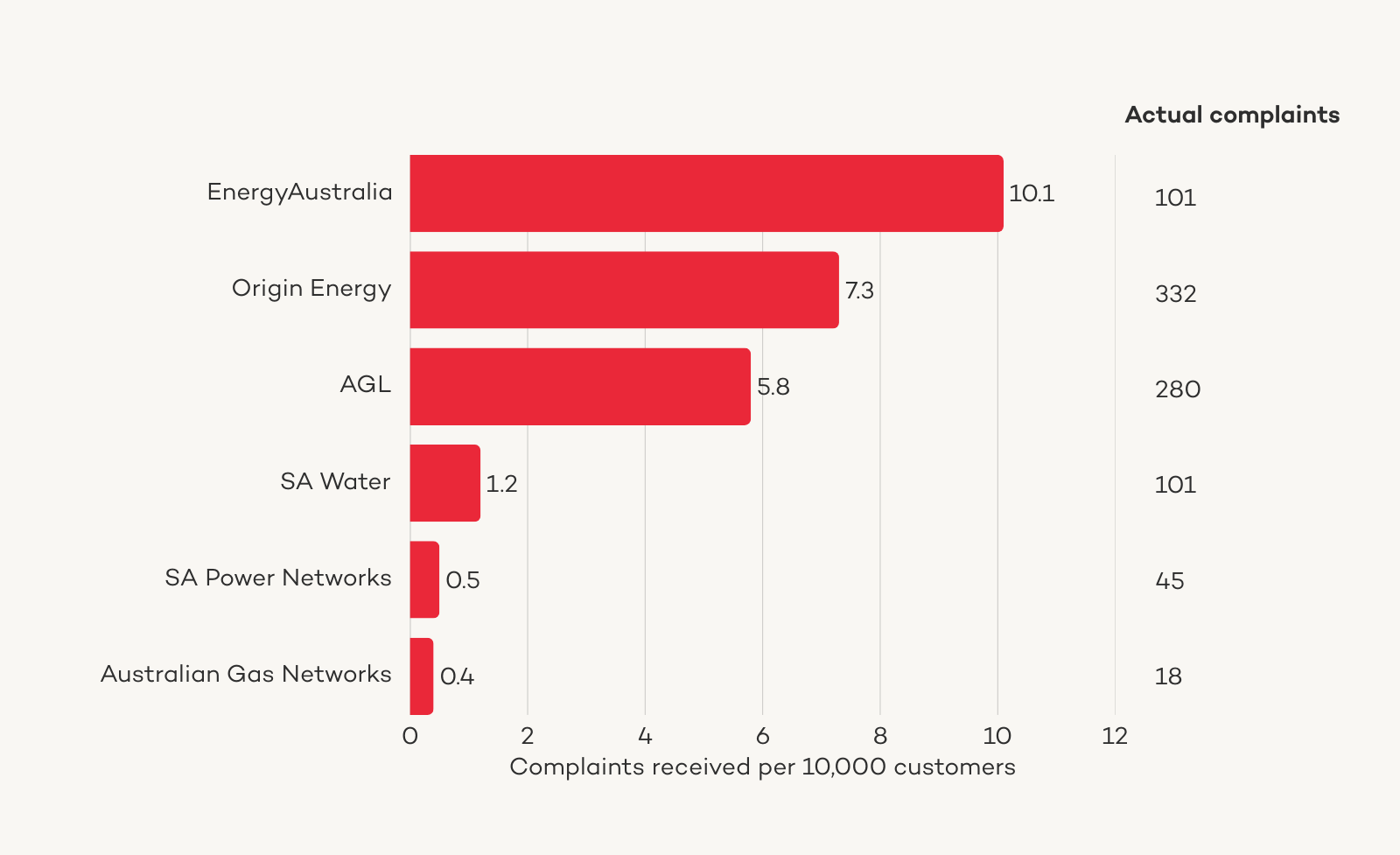
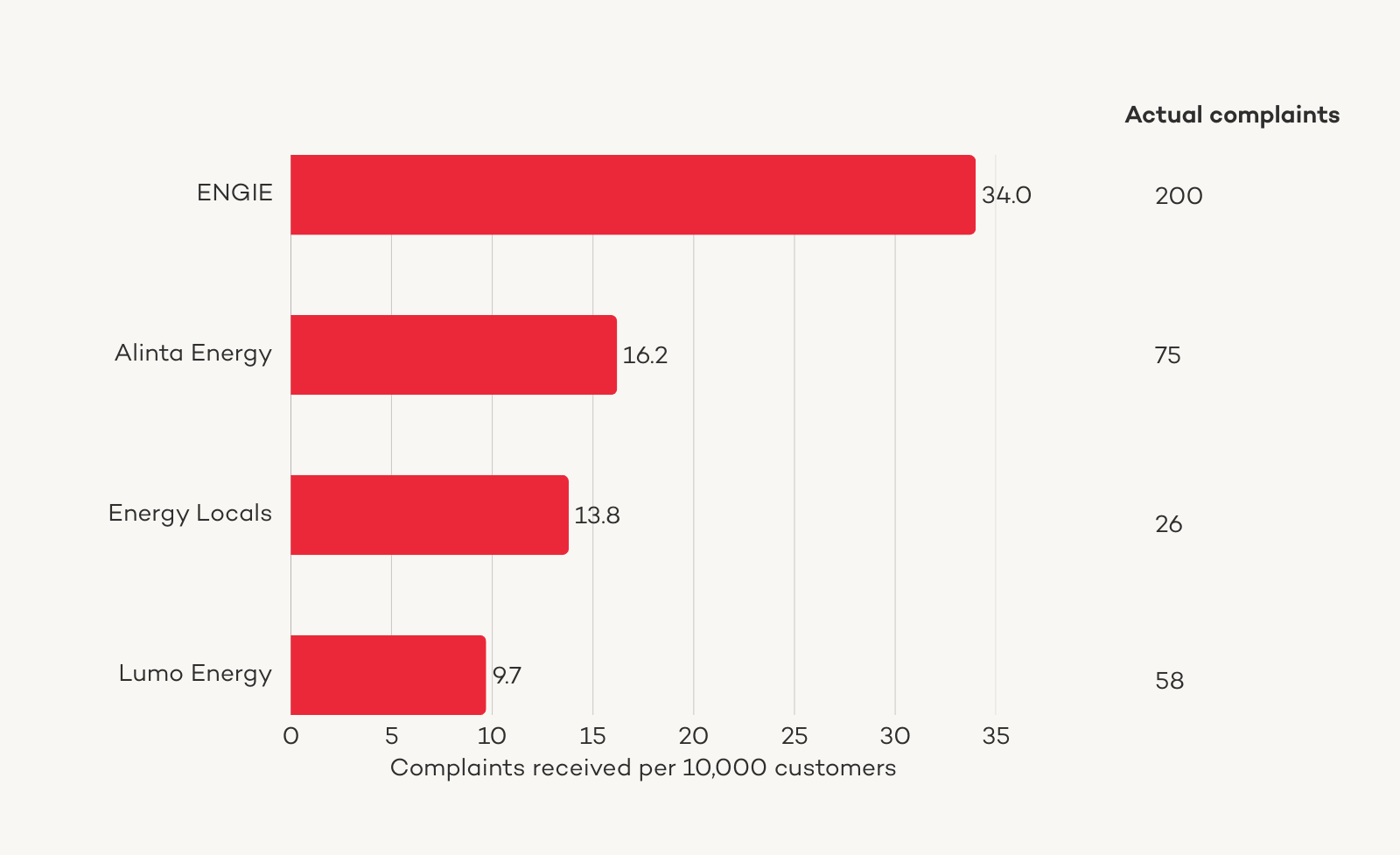
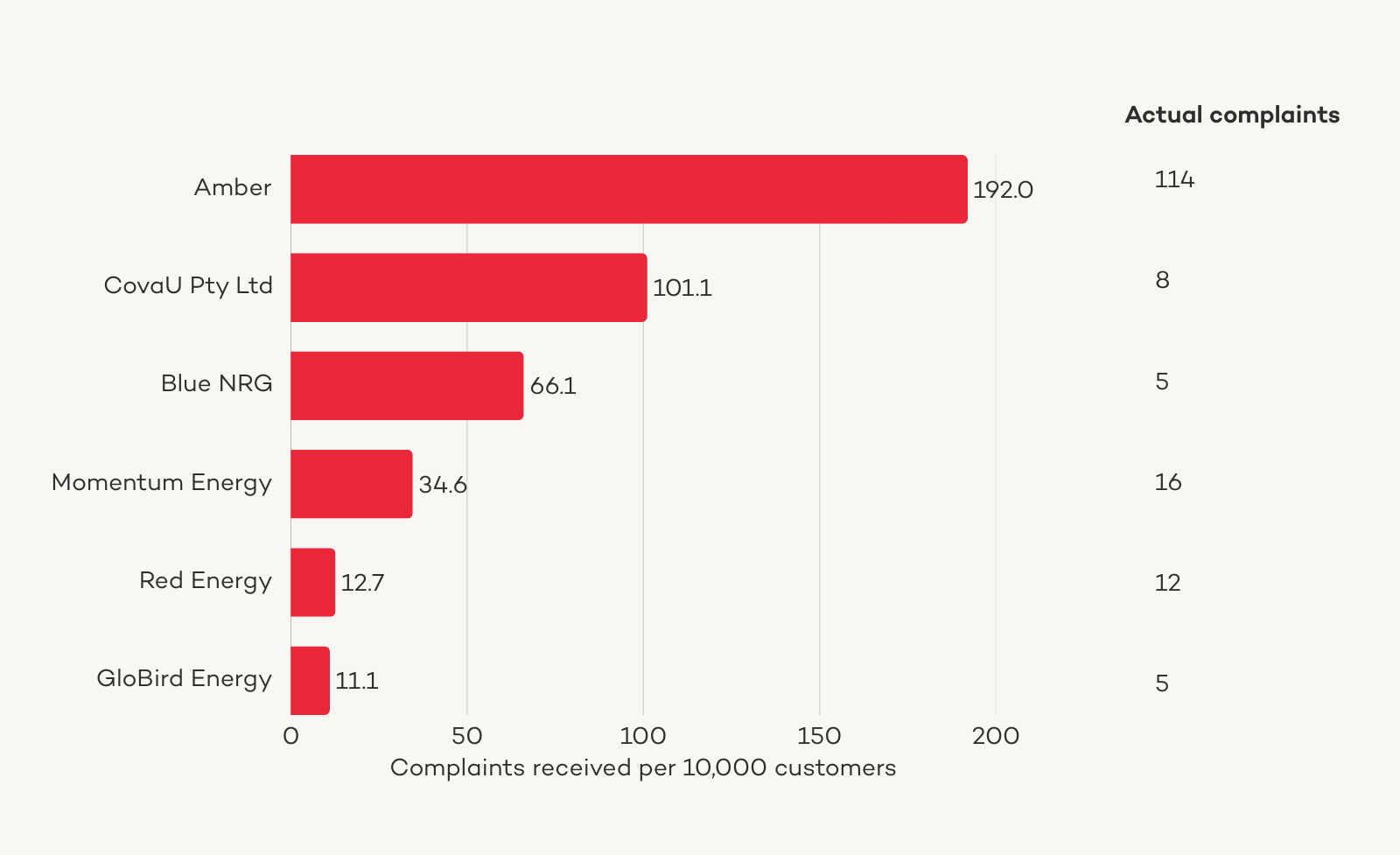
Complaints received by member
Complaints per 10k
Complaints per 10,000 customers (Large providers, >100k customers)
Complaints per 10,000 customers (Medium suppliers, 10-100k customers)
Complaints per 10,000 customers (Small suppliers, <10k customers)
Top 10 issues this quarter
Top 10 core issues received Oct-Dec 2025
Tier 2 Issue Cases received Percentage of total
Billing > High 339 16.67%
General Enquiry > Information general 306 15.04%
Billing > Error 211 10.37%
Billing > Estimation 146 7.18%
Billing > Account 119 5.85%
General Enquiry > Out of Jurisdiction 105 5.16%
Marketing > Contract 85 4.18%
Provision > Existing Connection 77 3.79%
Billing > Backbill 72 3.54%
Billing > Tariff 63 3.10%

Remember, we are here to help

EWOSA facilitates the prompt resolution of complaints between customers of electricity, gas and water services and members of our scheme by providing a free, independent, accessible, fair and informal service to customers.

Call us on 1800 665 565 or submit a complaint via our web form.